


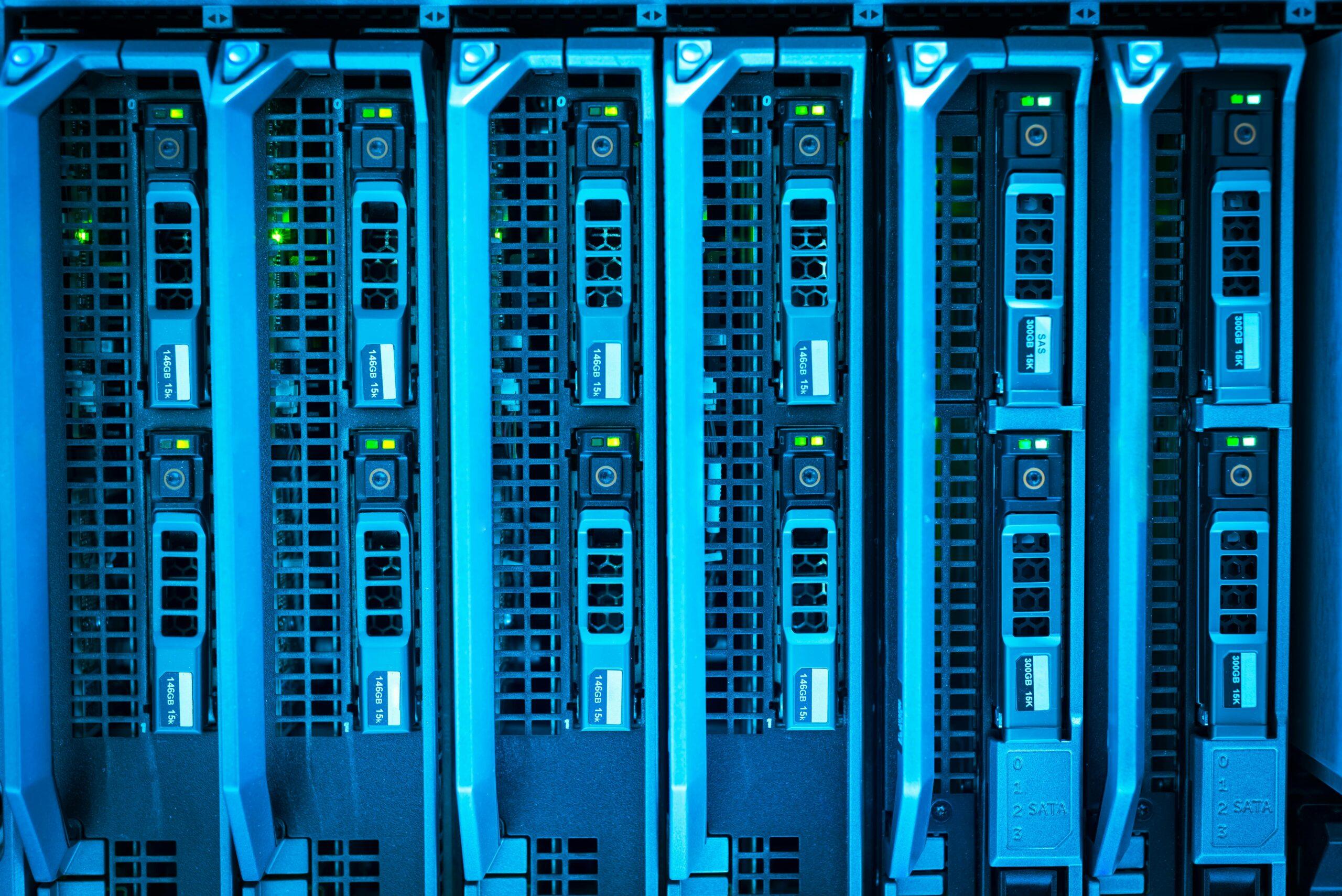
Data Centers: The Good, The Bad, and The Ugly
With the advancement of Artificial Intelligence (AI) the need to power these systems has become a hot topic – literally. Data centers consume massive quantities of water, primarily for evaporative cooling to prevent servers from overheating. U.S. data center water usage could reach 32 billion gallons annually by 2028. Balancing the positive aspects (e.g. jobs, tax revenue, economic development, etc.) against the negative (e.g. high water consumption, potential adverse environmental impact, etc.) is a challenge facing many communities.
How much do you know about Data Centers?
How much water is needed for a Data Center? Large facilities using evaporative cooling systems use 1 to 5 million gallons per day which is equivalent to the daily water consumption of a town with 30,000–50,000 residents. A typical AI chat interaction of 20-50 queries can “consume” roughly a 16oz bottle of water. While aggregate water use for data centers is only about 0.3–0.4% of total U.S. daily water withdrawals, the impact is highly local, with many centers located in drought-prone areas like Arizona and the Colorado River Basin. Data centers consume water directly for cooling, but also consume huge amounts of water indirectly through the electricity they consume, which is often generated using water-intensive processes.
How many data centers are in AZ? Arizona is experiencing a massive boom in data center development, particularly in the Phoenix metro area (Goodyear, Mesa, Avondale), driven by AI demand, cheap electricity, and tax incentives. Major projects include a $1B Google center, Microsoft facilities, and huge investments in Pinal County, with over 125 data centers currently in Maricopa County.
Why build data centers in the deserts of Arizona? Low disaster risk, available land, and a major fiber-optic pipeline connecting Texas to California. In addition, water use can be greatly reduced utilizing cooling methods other than evaporative cooling. While exact percentage data on Arizona’s >150 data centers specifically using evaporative cooling is not publicly disclosed due to industry secrecy. High water scarcity is forcing a rapid shift away from it. While 75–90% of data centers globally use water-based cooling, new Arizona projects are increasingly moving toward zero-water or air-cooled technologies to manage local water constraints.
Will a data center be built in Oro Valley? There is no plan to build a data center in Oro Valley. However, a data center has been approved to be built in Marana, near Luckett and Hardin Roads. The major “$1B+” “Project Blue” proposal has faced heavy backlash, leading to its rejection by the Tucson city council and the withdrawal of initial operator Amazon Web Services. “Project Blue” is a large-scale project that will now move forward under developer Phil Beale on Pima County land rather than Tucson city land. “Project Blue” drew intense community, environmental, and political debate, centered on water usage and power consumption. Controversy continues as the contractor for “Project Blue” obtained a permit to use Tucson City water for dust abatement during construction. City of Tucson stated that they will revoke the permit. “Project Blue” will continue and stated that they obtained non-drinking water from another source. The project is estimated to generate roughly $407 million in tax revenue over ten years and create about 4,200 construction jobs and up to 400 permanent jobs.
What type of cooling system will be used in the Marana data center? The proposed data center in Marana will use an air-cooled, closed-loop system rather than water-intensive cooling. Air cooling (dry cooling) is designed to operate without consuming large volumes of water, preventing high water usage. This technology is selected to comply with local regulations prohibiting the use of potable water for cooling and to address water sustainability in the region. This approach aligns with trends in Arizona to use dry cooling for new data centers to conserve local water resources.
What are environmentally friendly options for cooling and operating data centers?
- Dry Cooling/Air-Cooled Heat Exchangers: These systems circulate heated fluid from servers through external coils, using ambient air to remove heat rather than evaporating water.
- Liquid Immersion Cooling: Servers are submerged in non-conductive dielectric fluid, which transfers heat more efficiently than air.
- Closed-Loop Systems: By keeping water inside the cooling pipes, these systems minimize water loss from evaporation and allow for reuse.
- Free Cooling / Ambient Air: Utilizing cold exterior air (air-side economizers) to cool servers, particularly in colder climates.
- Adiabatic Cooling: This method uses water to cool air before it enters the data center, but only operates during high-temperature periods, saving water compared to continuous cooling.
- Non-Potable Water Usage: Utilizing recycled wastewater or “grey water” reduces the strain on local fresh water supplies.
- Water Treatment and Management: Enhancing water treatment in cooling towers can decrease the need for “blowdown” (draining) to remove mineral buildup, thus saving water.
- Geothermal/Deep Lake Cooling: Using cold, deep water from lakes or natural aquifers to provide cooling, with the water returned to its source rather than evaporated.
For more information on reducing water in data centers, Environmental and Energy Study Institute (EESI) has an article on the topic. For specific cooling solutions, Novva provides information on water-free cooling, while Equinix discusses its water-responsible strategy.